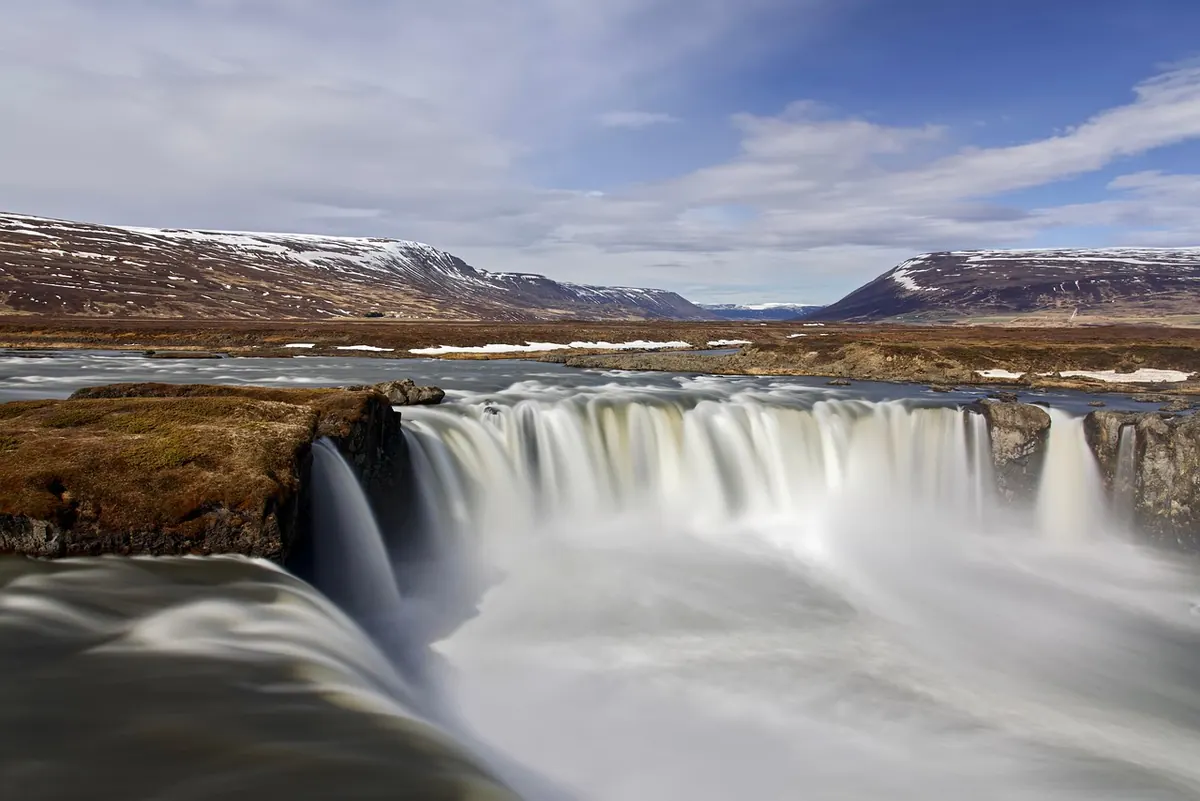
Iceland changes character several times a year, and the version you get depends almost entirely on when you book. Go in June and you can drive at midnight in broad daylight; go in December and you'll see the same landscape for perhaps four hours a day, lit low and pink. Neither is better than the other — they are simply different holidays. What follows is a month-by-month breakdown of daylight, weather, road access and the realistic odds of catching the aurora, so you can pick the window that matches the trip you actually want.
The two Icelands: light and dark
Almost every planning decision comes back to daylight. Reykjavík gets roughly four hours of usable light in late December — the sun crawls up around 11.20am and is gone by 3.30pm — and close to 21 hours in late June, when it sets just after midnight and rises again before 3am. North of the Arctic Circle, on Grímsey, the sun does not set at all around midsummer.
That swing shapes everything else. Highland roads are buried for half the year, campsites shut, some bus routes stop running, and the tours on offer change completely. Winter is not closed — the south coast and the Golden Circle operate all year — but the country you can realistically reach shrinks a great deal.
The Gulf Stream keeps temperatures milder than the latitude suggests. Reykjavík averages around 11°C in July and hovers near freezing in January. Wind, not cold, is what you'll remember.
Northern lights: September to March
The aurora needs three things: darkness, clear skies and solar activity. Iceland has the first from roughly the start of September until mid-April, though the deep, properly black nights — the ones that make aurora hunting feel worthwhile — run from October to March.
September and March are quietly excellent. Geomagnetic activity tends to be livelier around the equinoxes, the nights are long enough, and you are not fighting the worst of the winter weather. January and February give you the most darkness per day, but also the highest chance of a cancelled tour or a closed mountain pass.
What actually improves your odds
- Check the cloud forecast first. A clear sky on a low KP index beats a cloudy sky on a high one, every time.
- Get away from Reykjavík. Twenty minutes out of the city makes a visible difference; an hour makes a big one.
- Choose a small group. A minibus or self-drive hunt can chase gaps in the cloud; a full coach cannot.
- Give it several nights. Two nights in February is a gamble. Five is a plan.
- Mind the moon. A full moon washes out faint activity, so check the phase before you lock in dates.
Pack as if for sleet: thermals, a waterproof outer layer, hat, gloves and boots with grip. You will be standing still in the cold for hours at a time.
Midnight sun and the green season: May to August
Summer is when Iceland opens up. The F-roads into the highlands — Landmannalaugar, Askja, Sprengisandur — normally open between late June and September, depending on snowmelt, and that is the only window in which you can reach the interior. Camping, hiking, rafting, glacier walks and long days on the Ring Road all belong to this stretch.
June is bright and comparatively quiet; July and August are the busiest months, and the popular south coast stops fill up by mid-morning. If you want midnight sun without the crowds, aim for the second half of June or the first week of September.
Wildlife follows the same calendar. Puffins arrive from late April and are gone by mid-August, with June and July the best months to see them. Whale-watching from Húsavík or Faxaflói Bay generally runs from April to October.
Two summer cautions. The midges around Mývatn in July and August are genuinely unpleasant — a head net costs almost nothing and saves a great deal. And "warm" is relative: 15°C in a stiff wind still calls for a jacket.
Month by month at a glance
- January–February: four to six hours of light, coldest and snowiest, best aurora odds, highlands closed.
- March: longer days, strong aurora chances, ski touring in the north, still wintry on the roads.
- April: shoulder season, mixed weather, quiet roads, whale season beginning.
- May: 17–20 hours of light, waterfalls at full flow, puffins arriving.
- June–August: midnight sun, highlands open, everything running, peak prices and crowds.
- September: aurora returns, autumn colours, highland roads often still open early in the month.
- October: dark nights, storms building, fewer visitors, ice cave season starting.
- November–December: short days, Christmas lights in Reykjavík, reliable darkness, some closures.
Roads, weather and what to expect
The Ring Road is open all year, but winter driving on it is a genuine skill. Wind gusts on the south coast have been known to tear car doors off, and road.is and vedur.is are the two sites locals check before setting out. If you are not confident on snow and ice, base yourself in Reykjavík and take tours rather than hiring a car in January.
Mountain passes in the Westfjords and the north close for days at a time in winter. Ice cave tours under Vatnajökull run roughly from October to March and should only ever be done with a guide. A full tank, a charged phone and warm layers are basics, not extras. For anything involving remote travel, check Safetravel before you go.
How to choose your dates
Decide what you are actually there for. If the aurora is the point, book five to seven nights between mid-September and late March, stay somewhere with dark skies, and treat every clear night as a bonus rather than a guarantee. If you want to hike the highlands, see puffins and drive the Ring Road without snow, the window is late June to early September.
For a first trip trying to do a bit of both, late May and early September are the sweet spots: long days, manageable weather, thinner crowds and a fair shot at the lights at the very edges of the season. Book accommodation early whichever you choose — Iceland's room stock is small, and the best places go months ahead.
Photo: suju-foto / Pixabay